
Why does my fine fescue lawn keep dying in the same spot?
Hi team,
Interested if anyone has any advice here.
I have this spot on the lawn that never thrives.
Over the years I’ve probably replaced with ReadyLawn four times, but the grass always seems to die back in patches. The last time I fixed it was probably last autumn.
It’s under an olive tree, shaded a bit by the spa. It’s fine fescue, so should do ok in the shade. I thought it might be chemicals from emptying the spa on the lawn once, but the sod’s been replaced so many times, I think that’s unlikely.
The lawn is well fed, following the application guide, and the rest is in good health. No recent treatments , other than Axoxy over the whole lawn. Grub is done regularly.
Bit gutted it looks like it’s going to go from healthy to barren again!
Any ideas welcome.
Cheers
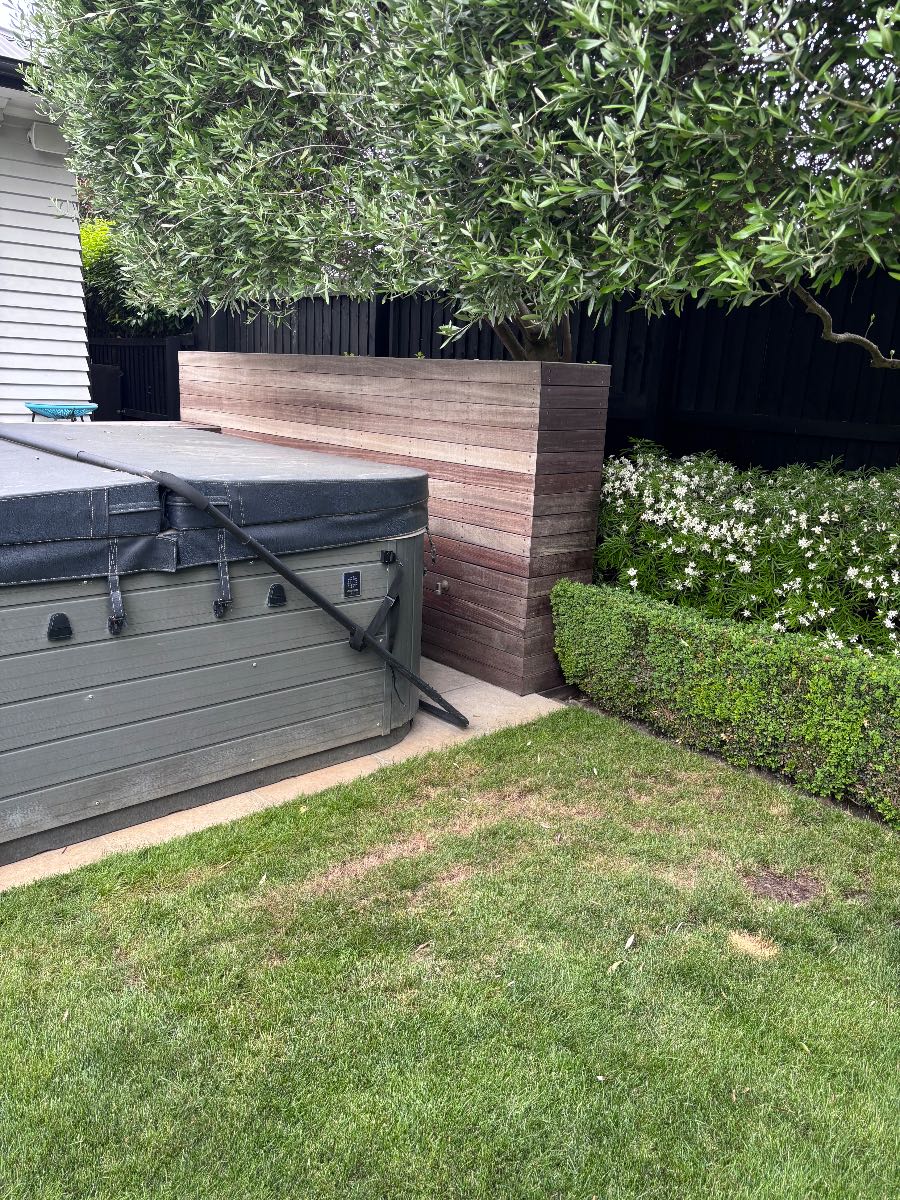
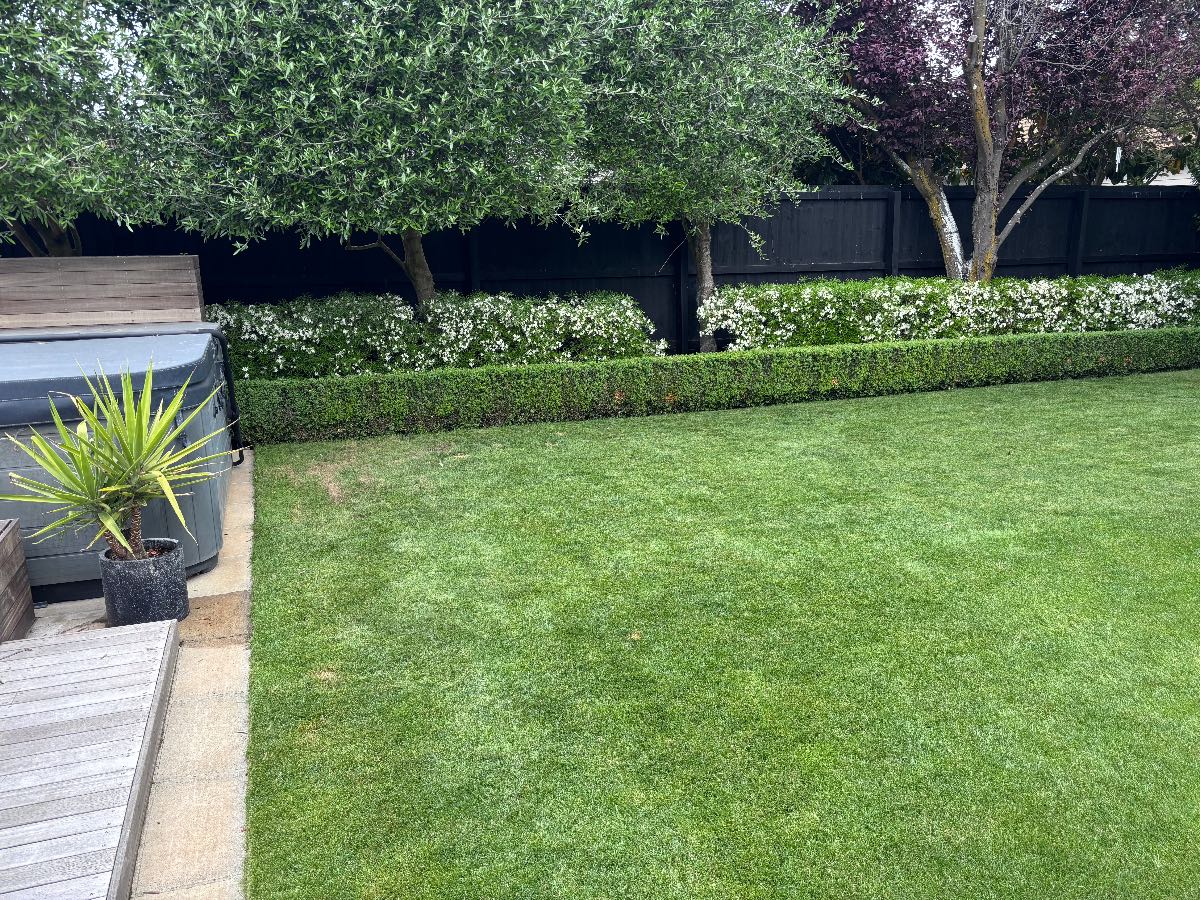
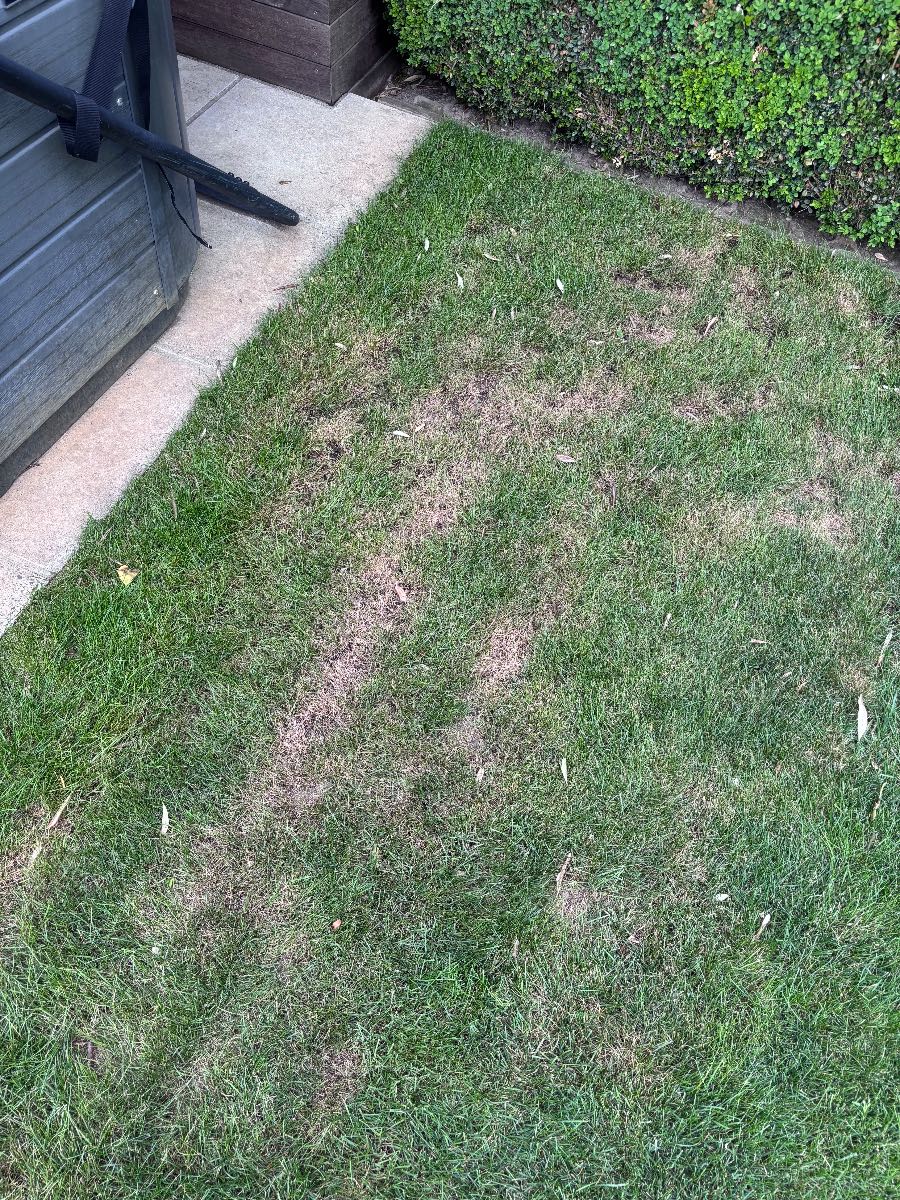
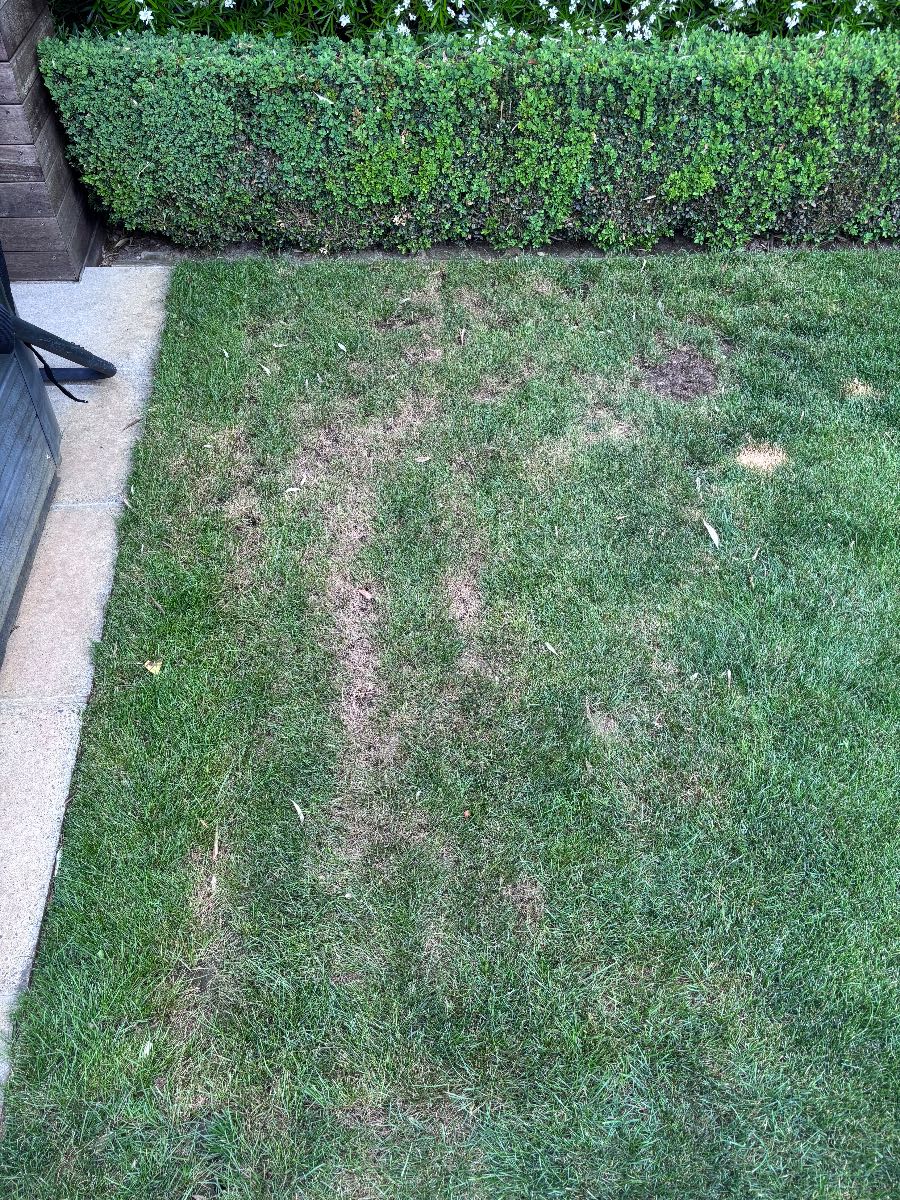
Have you tried pushing a probe or something solid into the soil there, say about 250 mm deep, to check for a big tree root? If there isn't one pulling moisture away, it could be something related to the spa pool. You might find there's something under that section drawing water out. In that case, I’d go heavier with a granular wetting agent in that specific spot to help it hold moisture.
@Jeremy RowIt either that or it could also be poor irrigation coverage in that spot. If the soil's drying out, you might see a bit of fertiliser burn as soon as you put granular down, which could explain the repeated dieback.
@Jeremy Row either that or it could also be poor irrigation coverage in that spot. If the soil's drying out, you might see a bit of fertiliser burn as soon as you put granular down, which could explain the repeated dieback.
@Jonny Hicks Yes, would align to fertiliser going down, but there is a head right in that corner. I did a test recently and think I need more water, in general, when fertilising. I’ve aerated but could dig out to check for a root. The spa sits on top and added later, so no pipes for that…..
@Aaron Smith You can get that near the head when you don't have head to head coverage. Might be worth putting a tuna can under it in that area and see if it's actually getting any water in that spot.
@Jonny Hicks I did the water test. Six plates over the lawn, one each corner, two in the middle. All seems to get water around the same 20-25mm over 30 mins. No problem with the screwdriver test either. Rest of the lawn is very healthy. Now the impacted lawn is all back to where it was before repair. Two years (at least) in a row, so must be something area specific. Any NZLA magic you could suggest?
@Aaron Smith Yeah, I’m fairly convinced it’s fertiliser burn, it’s consistent with what you’ve said about putting fertiliser down.
Those bushes along the edge could be drawing quite a bit of moisture out of the soil. Having good irrigation coverage is a positive, but getting water onto that area doesn’t necessarily mean the soil is holding enough moisture between watering. If there are dry or water-repellent patches, applying fertiliser can make the damage more likely due to fertiliser burn.
Everything with turf care really comes back to stress. Limited sunlight, competition from shrub roots and dry soil can all stack up, leaving that corner more susceptible to fertiliser burn. Shade and reduced airflow can also contribute to disease pressure, so there are a few things to consider.
I’d start by targeting that area with a wetting agent before granular fert applications and checking the moisture below the surface. It won’t stop the shrubs taking up water, but it can help water penetrate more evenly if the soil is repellent. Keep the area adequately moist and hold off on further fertiliser while it recovers.
It’ll be a bit of trial and error, but I’d work through the moisture side first before moving on to the next possibility. Shame our lawns can’t talk to us, to be fair!
I’d also be targeting that area more frequently with a manual core aerator.
@Jonny Hicks to be really honest, it’s hard to tell exactly what’s going on from photos, and it could actually be the opposite of what I mentioned above. If that corner is staying overly moist and the leaf isn’t drying out, there could be a fungal issue present.
The timing you mentioned around applying fertiliser still makes me lean towards fertiliser burn, but disease is worth keeping in the back of your mind, particularly in a sheltered corner with shade, limited airflow and humidity. I’ve got a corner at my own place that gets fungal issues under those conditions.
You’re in the best position to check whether it’s drying out underneath or actually staying too wet. Those are two quite different situations, and I wouldn’t want to confidently call it one way or the other from photographs alone.
@Jonny Hicks Thank you, appreciated. I think it’s more likely to be too wet, than too dry. I think the ferts probably burt it, then the dead grass gets a bit manky. I’ll aerate and put some fungus pro down. Cheers.
Anyway you get a core sample about 150mm down .
Under or over watering can be seen in the soil moisture.
I've read up on I think buxus hedge (issues with hedge like blight don't effect monocots) but apparently it's root system might .
I'm looking for compaction or root competition, moisture levels .
One lawn guy I watch from USA uses a soil probe to pull core samples . Test bad area v good area . Watch out for irrigation lines .
@Stephen Went down about 300mm. Gave it 40 mins water yesterday so has penetrated well.
@Aaron Smith
@Aaron Smith no rocks , no compaction, minimum to no thatch , no shrub tree roots . Good looking soil .
About the only thing could be fungal now , low air flow damp over night .
Your standard water practice early in morning?
That straight line does it match water surface flow ? Or mower wheels.
Do a water soak test but I think hydrophobic surface isn't the cause .
Ff is more prone to fungal,
There is a fungal condition called persistent. Only read a we bit about it .
I was going to mention a moisture meter but seems an added expense.
Super close up pics of the grass leaves , check first thing in morning for mycelium. I see there's more info on fungal on here now .
Thanks @Stephen Azoxy went down four weeks ago, granular fertiliser three weeks ago. I wonder if @Jonny Hicks is correct in it’s not getting enough water with the fertiliser?
@Aaron Smith I've only had spots on leaves with not watering in granular well .
Certainly a hard one
Yeah. I’m lost. Was healthy all winter. Only since the sprinklers have come back on and (maybe) the heavy granular. :(
@Aaron Smith makes it sound more like Jonny is on the money with his thoughts. Especially if it’s ok over winter when moisture is higher in that area. Normally problem areas are at their worst in winter and improve over warmer months.
@Jeremy Row Yeah, although sometimes I think it’s more like it’s too wet, than too dry. Once it thins out, it gets pretty scraggly. Might try more water though…logic stands up.
Any thoughts if aerating again would help?