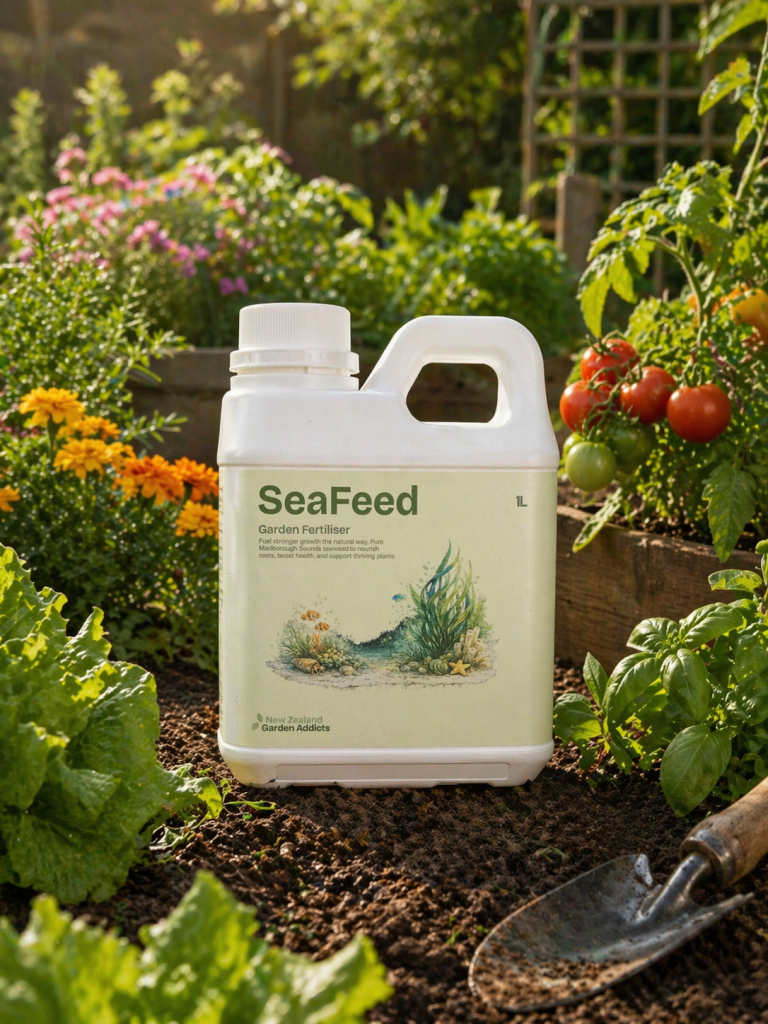
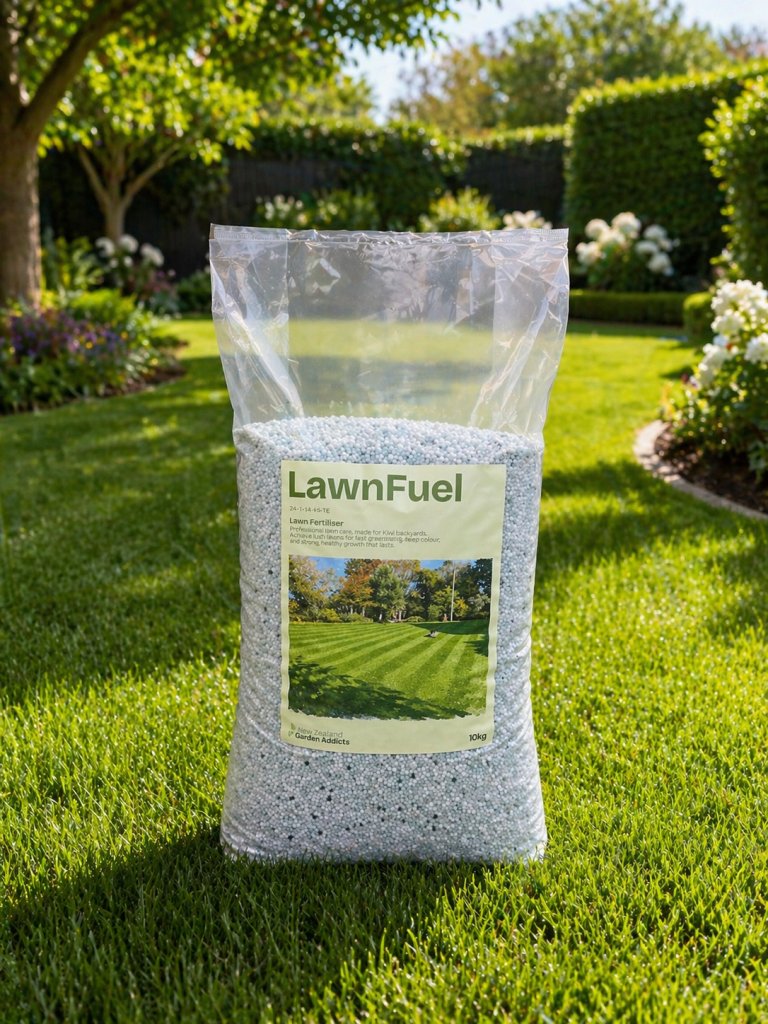
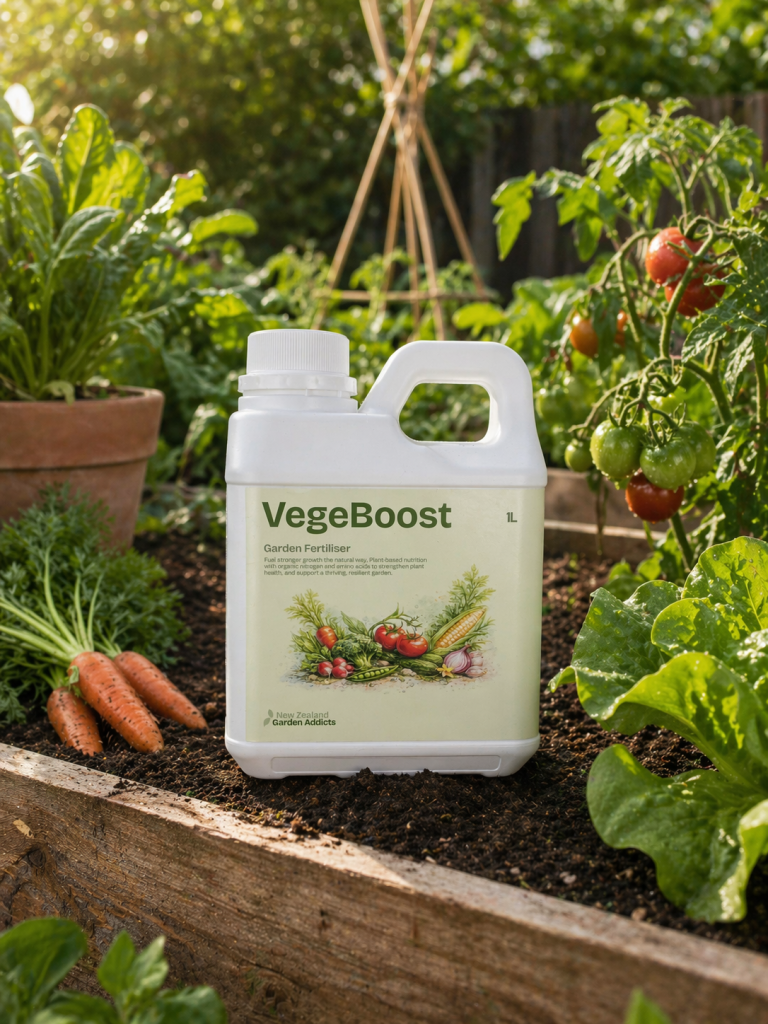
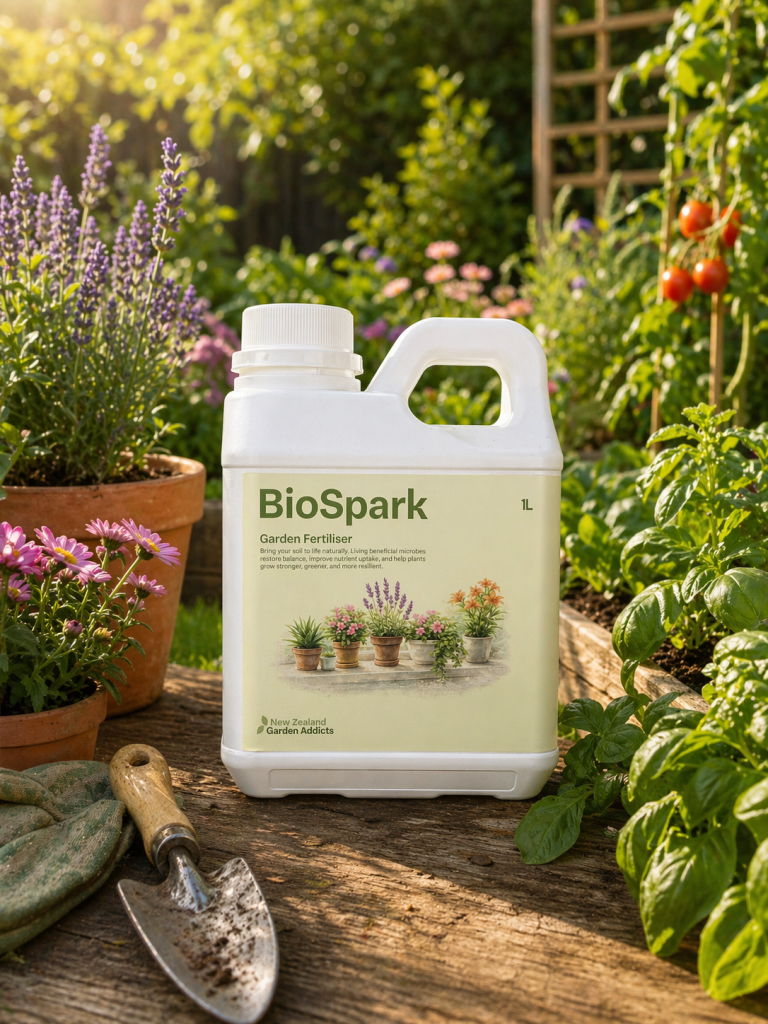
FishBio – Organic Fish and Seaweed Liquid Fertiliser
FishBio feeds plants and supports soil biology in the same application. The organic nitrogen encourages steady, sustained growth rather than a quick flush, and the 15% organic matter content genuinely improves soil over time. You’re getting a solid trace element profile too: calcium, magnesium, iron, sulphur, and zinc are all present in meaningful amounts.
It applies as a soil drench or foliar spray and works across vegetables, fruit trees, ornamentals, lawns, and pot plants. No synthetic inputs.
Wanting to know more?
See more info about this product!
*For best results from the new NZGA range, use SteadyGro as your base fertiliser across the garden, then rotate through the four liquid products weekly, applying them as either a soil drench or foliar spray.
FishBio feeds plants and supports soil biology in the same application. The organic nitrogen encourages steady, sustained growth rather than a quick flush, and the 15% organic matter content genuinely improves soil over time. You’re getting a solid trace element profile too: calcium, magnesium, iron, sulphur, and zinc are all present in meaningful amounts.
It applies as a soil drench or foliar spray and works across vegetables, fruit trees, ornamentals, lawns, and pot plants.
Description
FishBio is a liquid fertiliser made from deep-sea fish and wild-harvested seaweed. The fish component brings organic nitrogen and a broad mineral profile; the seaweed adds bioactive compounds that encourage soil microbial activity and help plants handle stress from heat, drought, and disease.
Think of it as a liquid top-up rather than a standalone programme. If you’re already running a granular fertiliser in your beds or on your lawn, FishBio works in between feeds to keep the biology moving and fill in any nutritional gaps. For gardeners not running granulars, it can carry the nutritional load on its own, just at a gentler pace.
The NPK is modest: 3% nitrogen, 0.3% phosphorus, 0.8% potassium. That’s intentional. This isn’t a high-analysis push product. It’s consistent, gentle feeding backed by real organic matter (15%) and a solid mineral breakdown. Calcium at 120 mg/L, magnesium at 300 mg/L, sulphur at 12,000 mg/L, with iron and zinc also present. For intensive vegetable gardens where soils get stripped fast, that trace element contribution matters.
Because it’s organic-based, results build over time. Soil structure improves, nutrient availability increases, and plants generally show it in their colour and growth habit. One bottle covers lawns, garden beds, fruit trees, roses, ornamentals, and pots, which earns its place in the shed through a long growing season.
How to use
Garden beds, soil drench
Mix with water and apply to moist soil during active growth (spring through autumn). Water in if rain isn’t coming. Avoid applying when the soil is already heat-stressed or bone dry.
Foliar spray
Dilute and spray directly onto foliage in the early morning or late afternoon. Useful for a fast top-up when plants are slow or stressed. Once fruit has set, switch to soil application rather than spraying foliage.
Lawns
Apply through a watering can or sprayer and water in afterwards. Every 3 to 4 weeks through the growing season is a reasonable interval.
Pot plants
Mix at pot-appropriate rates and apply to moist potting mix. Pots lose nutrients faster than garden beds, so regular feeding makes a real difference here.
Frequency
Every 2 to 4 weeks during active growth is a solid starting point. Adjust based on what you’re seeing in the plants.
Application rates
Garden beds (soil drench)
50–80 mL per 10 L water, covering 10 m²
Foliar spray
50–80 mL per 10 L water
Lawns
200–300 mL per 5 L water per 100 m²
Pots & containers
Small (up to 15 cm): 3–5 mL per 1 L water
Medium (20–25 cm): 5–10 mL per 1–2 L water
Large (30–45 cm): 10–20 mL per 2–4 L water
No reviews yet. Be the first to leave a review!
Please log in to leave a review
Log In