Pythium blight on NZ lawns: The one that can’t wait
Pythium blight is the lawn disease that catches people off guard because of how fast it moves. A lawn that looks fine on Friday morning can have dead patches the size of dinner plates by Saturday if conditions are right and nothing has been applied. That speed is what separates it from everything else and why it needs a different approach from most diseases.
It’s worth knowing upfront: pythium is not technically a fungus. It’s an oomycete, a water mould, which is why conventional fungicide chemistry doesn’t always cover it, and why wet conditions are so central to its development.
Two forms to know
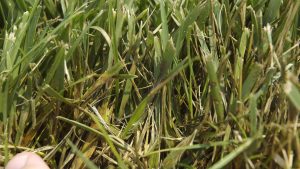
Foliar blight is the acute one. Greasy or slimy-looking patches appear suddenly after a warm humid spell. The affected areas have a water-soaked look and you may see grey-white cottony mycelium on the leaves in early morning when humidity is high. By midday it dries off, but the damage is already done. Patches can expand in hours. Perennial ryegrass is the most susceptible species, which covers the majority of NZ home lawns.
Root rot is the chronic version. Roots become soft and discoloured, the plant slowly declines, and the lawn thins and yellows over time. Less dramatic than foliar blight but harder to identify and slower to recover from. It develops in areas with persistently poor drainage and high soil moisture.
Pythium is also responsible for damping-off, the failure of newly germinated seedlings after a spring or summer seeding. Same pathogen, different situation. If you’re losing seedlings shortly after germination rather than dealing with an established lawn, that’s a separate problem worth understanding on its own.
What’s causing it
The conditions for pythium foliar blight to take hold are specific: daytime temperatures above around 30 degrees Celsius, nighttime temperatures staying above 20 degrees, and humidity above 90% for 15 or more hours. That combination happens reliably in Auckland, Northland and the Bay of Plenty through January and February. In a particularly hot humid summer it can occur further south, but for most of the South Island it’s rare.
Wet conditions are the common factor across all three forms. Evening or overnight irrigation during a warm humid spell is probably the single most common avoidable trigger for foliar blight. Adding water to an already humid night extends the leaf wetness window that the pathogen needs to infect.
High nitrogen feeding going into a hot humid period compounds the risk. Soft, lush growth is more susceptible. The same advice as for brown patch applies: back off the nitrogen push through summer rather than maintaining a high-rate granular programme.
Response has to be immediate
For foliar blight specifically, speed is everything. If you see the greasy, water-soaked patches appearing in the morning and the forecast shows more warm humid nights, apply NZLA Azoxy. that day. Azoxy is on label for pythium leaf blight and pythium root rot. Don’t mow for 24 hours either side of application, and apply to dry leaves so the product stays on the leaf surface rather than washing off.
NZLA Azoxy provides useful protection but it’s worth being clear: more specialised pythium chemistry used on golf courses and bowling greens isn’t currently in the NZLA range. For home lawns, Azoxy handles most situations well. For high-pressure situations on fine turf, professional-grade chemistry through trade channels is the best solution, however that’s very expensive.
Cultural fixes
Reduce irrigation immediately when pythium is active or conditions favour it. Switch any irrigation to early morning so the lawn dries through the day rather than sitting wet overnight.
NZLA Penetrate applied monthly heading into summer is a useful preventative step. It moves surface water down through the profile and reduces canopy moisture duration. A lawn that dries faster between rainfall events is less hospitable to pythium.
Improve airflow where overgrown shrubs or fences are keeping the lawn in still, humid air. Improve drainage in low-lying areas that hold water.
After the damage
Pythium foliar blight kills the turf in affected patches. The grass is gone and won’t come back without over-seeding. Once conditions stabilise and the disease is controlled, over-seed the dead areas in the next suitable seeding window. Don’t over-seed into active disease pressure or wet conditions.
Root rot recovery is slower. Address the underlying drainage and watering conditions first, then support the lawn with a balanced fertility programme and let it gradually recover over a season.
Comments
0