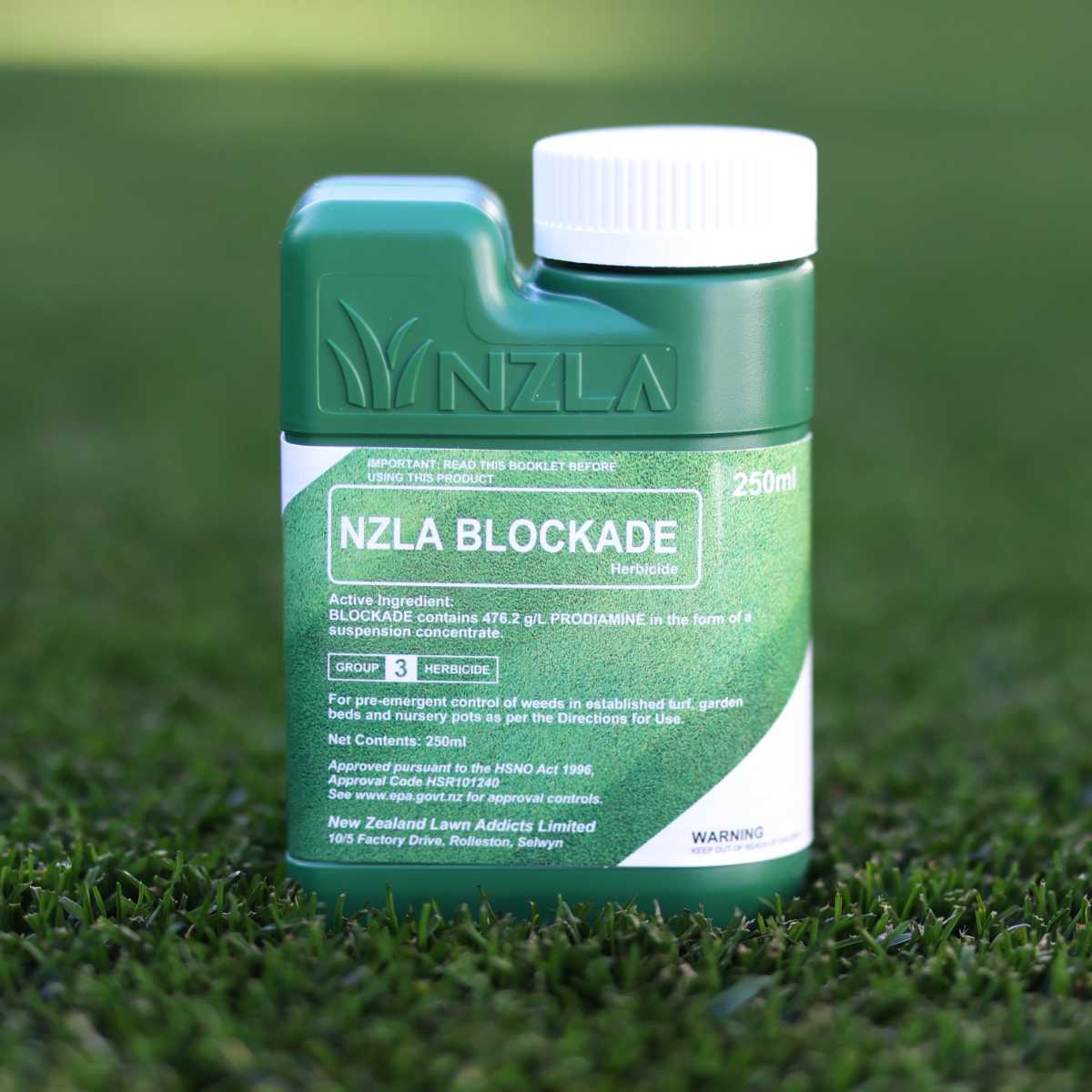
Poa annua prevention in autumn: is NZLA Blockade the right pre-emergent?
A pre-emergent like NZLA Blockade stops germinating seed from establishing. It doesn’t kill seed sitting dormant in the soil and it doesn’t stop them germinating either. What it does is inhibit cell division in the root tips and shoots of the emerging seedling, causing it to die before it even breaks the surface.
Applying Blockade to established poa will do nothing against the plant. It will, however, prevent any more seeds from germinating. That’s why it’s important to get it down in late summer to early autumn, before soil temps drop and poa begins to germinate.
The big con for NZ users is the label. Blockade is not registered for use on cool-season turf in New Zealand. In the US, Prodiamine (Syngenta’s Barricade) is the standard pre-emergent on cool-season lawns like Kentucky bluegrass, fescue and ryegrass, and the label there allows it.
The NZ label restricts it to warm-season turf like couch and kikuyu. The question I get asked all the time though is whether it’s safe on cool-season lawns. The answer is yes, however I can’t be recommending off-label use. Here’s a link to the US label if you happened to be curious about the rates they use over there on Fine Fescue and Rye. https://assets.syngenta-us.com/pdf/labels/SCP%201139A-L10D%200224.pdf
The other thing to consider is that Blockade remains active in the soil for up to 6 months. If you’re planning a spring oversow, the residual effects will still be present and it will essentially stop all seed development, including your grass seed.
It’s a great product. I use it around my garden beds to prevent weeds. If there are existing weeds, I’ll hit them with some glyphosate first to knock them down, then water the Blockade in a few days later (label says within 7 days) to lay down that pre-emergent barrier.