Brown Patch in NZ Lawns: How to Identify and Treat It
Brown patch is a summer disease. It shows up as irregular brown patches ranging from around 100mm to several metres across, often with a darker grey-purple ring around the outer edge where the fungus is actively moving into healthy tissue. That ring, which disappears by midday once the dew lifts, is the most reliable visual clue you’re dealing with brown patch rather than something else.
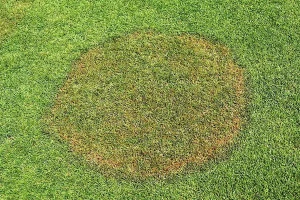 It’s less common in New Zealand than in subtropical climates, because the conditions that drive it need to line up just right. Nighttime temperatures need to stay above around 20 degrees Celsius combined with high humidity and prolonged leaf wetness. That combination happens most reliably in Auckland, Waikato and coastal Northland through January and February. It does occur further south, particularly in inland areas that get hot humid nights, but it’s not the first disease to suspect when you’re looking at summer patches in Christchurch.
What’s causing it
The fungus responsible is present in most soils. What turns it from background noise into an active problem is the combination of heat, humidity and a lawn that’s been pushed too hard with nitrogen.
High nitrogen going into summer or during a hot humid period is the single biggest avoidable risk factor. Soft, lush growth produced by a nitrogen push in hot weather is exactly what brown patch thrives on. The plant is growing fast, the cells are thin and water-filled, and the fungus moves through that tissue quickly. Lawns hit with fast-release fertiliser heading into a run of hot humid nights are at real risk.
The environmental trigger is nighttime humidity and leaf wetness. Brown patch needs the leaf to stay wet for extended periods overnight and into the morning. The smoke ring visible in early morning is the fungus actively advancing into new tissue under those wet conditions. As the day warms and dew lifts, the ring fades. The next damp night it comes back.
Perennial ryegrass and tall fescue are both susceptible, which covers the majority of NZ home lawns.
What to do about it
Back off the nitrogen. This is why the NZLA application guide has granular going down prior to the summer months, then the programme shifts to foliar liquids through the heat. Most people carry on pushing their lawn with fast-release fertilisers or granular feeds through summer, and that is a real risk factor. If brown patch has shown up in your lawn, that feeding approach is likely part of the reason. Back off the fast-release products, hold off the granular, and stick to foliar applications like NZLA Iron, Root Health, Humic and Restore for food without the nitrogen load that feeds the disease.
Reduce leaf wetness where you can. Evening watering is the obvious one: stop it. The lawn should not be going into a humid night with wet leaves. Mow regularly with sharp blades and improve airflow if hedges or fences are boxing the lawn in.
Chemistry
NZLA Azoxy is on label for brown patch. Apply at 23 mL per 100m2 in 4 to 8 litres of water. Azoxy is systemic, so it moves into the plant and stops the infection progressing. Maximum two consecutive applications before rotating to Fungus Pro.
Fungus Pro as the rotation partner provides contact protectant cover and knocks down surface mycelium. Running the two in rotation gives you systemic knockdown plus ongoing surface protection through a period of sustained disease pressure.
Get onto it early. Brown patch caught at the smoke ring stage with small defined patches clears well. Left to run for weeks into large dead areas, the plants in those patches die and the only path back is over-seeding in autumn.
After the damage
Dead patches don’t fill themselves in. Once the disease is controlled, over-seed the bare areas in autumn when temperatures drop and growing conditions return. Don’t try to over-seed into active disease pressure.
Lawns that get brown patch every summer are usually dealing with the same conditions each year. High nitrogen programme through summer, poor airflow, evening irrigation. Fix those and the disease doesn’t come back. I can’t emphasise this enough: people think they’re saving money by using fast-release fertilisers, but they leach more readily and often create more problems than they solve. They’re one of the biggest reasons lawns end up with constant issues: flushes of soft growth, higher disease pressure, uneven colour, and more frequent feeding just to keep things ticking over.
Comments
0