Leaf Spot and Melting Out in NZ Lawns: One Disease, Two Stages
Leaf spot and melting out are the same disease at different points in its progression. Understanding that distinction matters, because how you respond depends heavily on which stage you’re looking at.
Leaf spot is the early stage. Small dark spots appear on individual grass blades, usually with a light or bleached centre and a yellow halo around the edge. The lawn looks off and spotty, but the grass plants themselves are still alive. At this point the disease is doing leaf-level damage only.
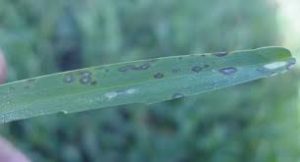 Melting out is what happens when leaf spot is left alone. The fungus works its way from the leaf tissue down into the crown of the plant, which is the growing point at the base. Once the crown is infected, the entire plant dies. Patches of the lawn appear to dissolve or collapse, hence the name Melting Out. What started as spotty leaves becomes bare or thinning areas that won’t recover without over-seeding.
What’s causing it
Both stages of this disease are driven primarily by stress. The fungus is present in most lawns, but it takes advantage of a plant that’s already under pressure. A healthy, well-managed lawn handles this pathogen without much trouble. A lawn that’s being pushed hard, mowed too short, or dealing with drought, compaction, or poor drainage is a different story.
Mowing height is the single biggest stress factor. Scalped or low-mown lawns are far more susceptible because the reduced leaf area weakens the plant’s ability to recover from infection. Leaf spot is strongly associated with lawns being cut too tight, particularly through spring and autumn when conditions for the disease are most favourable.
Nitrogen plays into it too, but in both directions. Deficient nitrogen slows growth and leaves the plant without the resources to fight infection. Excessive nitrogen, particularly fast-release products, forces soft growth that’s more vulnerable to disease. The balance matters. Moderate, steady feeding through a slow-release programme is the right profile.
Thatch and drought stress both compound the problem. Heavy thatch holds moisture at the crown and creates the damp, low-oxygen conditions the fungus prefers. Drought stress slows the plant’s recovery and makes infection more likely to progress to the melting out stage.
The seasonal windows in New Zealand are spring and autumn. Leaf spot tends to be most active through the temperature transitions of October and November heading into summer, and again in March and April as summer winds back. Melting out often follows in cooler, wetter conditions as those same infected plants lose their fight with the disease at the crown.
Treating leaf spot before it becomes melting out
The window to act is at the leaf spot stage. Once plants reach the melting out stage they’re dying or dead, and fungicide stops the spread but doesn’t bring them back.
First, lift the mowing height. If the lawn has been cut at 25 to 30mm, raise it to 40 to 50mm for the duration of the outbreak. Taking pressure off the plant is the single most important cultural step.
Second, check the fertility. If the lawn is visibly underfed and growing slowly, a light application of Charger or All Seasons granular gives the plant resources to fight back. If there’s been a recent hit of fast-release nitrogen, hold off and let the lawn work through that before feeding again.
Third, reduce any other stress points. Water in the morning so the lawn dries through the day. Address obvious drainage or compaction issues where you can. Don’t push the lawn with aggressive management while it’s under disease pressure.
Chemistry
NZLA Azoxy is on label for Leaf Spot , which covers both leaf spot and melting out. Apply at 23 mL per 100m2 in 4 to 8 litres of water. The application interval for Leaf Spot is 21 days, shorter than the standard 28-day interval for other diseases on the Azoxy label. Maximum two consecutive applications before rotating to Fungus Pro.
Fungus Pro (thiram) is both a rotation partner and a contact protectant. Where disease pressure is ongoing, running a Fungus Pro application between Azoxy treatments keeps the healthy tissue protected while the systemic chemistry works.
Getting Azoxy on at the leaf spot stage gives the best outcome. At the melting out stage it’s still worth applying to stop the disease spreading to adjacent plants, but manage expectations about what it can do for plants already dying.
After the damage
Dead patches from melting out won’t fill themselves in. Once conditions have stabilised and the disease is under control, overseed the bare areas. In spring, use the autumn window for overseeding once temperatures cool. In autumn, overseed in spring when growth fires back up. Don’t overseed into active disease pressure.
If melting out is hitting the same areas of the lawn year after year, the underlying stress hasn’t been fixed. Mowing height, fertility programme, thatch, drainage. Address whichever of those is the real driver and the disease stops coming back.
Comments
0