The Truth About A-List Seed in New Zealand
The A-LIST system is a credible turfgrass performance programme. Varieties carrying the logo have gone through years of rigorous US-based testing under low-input conditions, and a blend built around them is a solid product. There’s no NZ-based testing to back it up locally, though
The issue is how A-List has been picked up as a marketing strategy in New Zealand, sometimes without any real transparency about what’s actually in the bag.
 What A-List actually means
A-LIST is run by the Alliance for Low Input Sustainable Turf. It identifies grass cultivars that perform well under reduced nitrogen, lower irrigation, and better disease tolerance. The testing is rigorous. If a variety earns the A-List accreditation, it’s genuinely earned it.
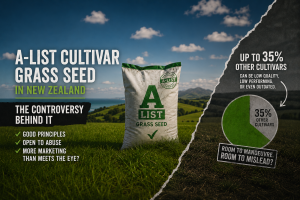
But an “A-List blend” doesn’t mean every seed in the bag is an A-List variety.
Under the blend requirements, a product only needs to contain 65% A-List approved varieties. The remaining 35% just has to be certified turf varieties. Forage ryegrass, uncertified seed, and VNS (variety not stated) seed are excluded, so there are some guardrails. But certified non-A-List varieties can still change from batch to batch depending on what’s available and what’s cost-effective at the time. The bag you buy this spring might not be the same blend as the bag you buy next spring.
Context: where A-List seed mostly ends up in New Zealand
A lot of A-List seed in New Zealand goes into council sports fields and public open spaces, and for that application, the batch-to-batch variation genuinely isn’t a major problem. A sports field gets over sown regularly, it sees heavy wear, the turf is managed for coverage and performance rather than precise appearance, and a slightly different blend in one season just blends in with everything else.
That’s a fair use of the product. For a council parks team managing large areas on a budget, ticking the A-List box means they’re using proven varieties in the majority of the blend, and no one is scrutinising whether the blend shifted.
For most people buying seed for a home lawn, the batch-to-batch variation genuinely isn’t a major issue. If you’re over-seeding a back lawn that gets regular wear and you’re not particularly fussed about exact colour and texture, a blend that shifts slightly from one season to the next is unlikely to bother you.
But a lot of our customers are particular about their lawns, and they should be. When you’ve built something that looks consistently good, the last thing you want is to oversow a bare patch and end up with a slightly different shade of green or a leaf width that doesn’t quite match. It’s the kind of thing that bothers people for years. For that customer, consistency matters, and the 35% non-A-List certified variety window is where that consistency can break down.
What to look for
Some suppliers run 100% A-List varieties in their blends, with no rotation of certified non-A-List varieties depending on what’s available or cost-effective that season. That’s the standard worth looking for if you’re maintaining a home lawn, because the composition stays consistent batch to batch.
To be clear, this isn’t a criticism of the A-List programme. The testing is rigorous and the approved varieties are proven performers. Worth noting, though, is that the trials aren’t conducted in New Zealand conditions, it’s around fifteen universities across the US carrying out the work.
We’re aware of customers who’ve bought a bag of seed one year, then picked up the same product eighteen months later only to find the blend had changed entirely because the certified variety percentage was different. It was on the label, but it wasn’t something that was pointed out at the time of purchase, and in some cases people didn’t realise until the seed was already in the ground. The certified variety component of any blend is disclosed on the label. That information is there if you look or ask for it. I would suggest keeping old label tags for your records.
Where we stand
We don’t lead with A-List or certification in our marketing because our products and reputation do the work, not a badge. We don’t publish the exact composition of our blends either. As the brand has grown, so has the reputation behind it, and at this point that reputation carries more weight than any label claim we could make.
We’ve been offered cheap seed, low-germination lines, and lower-quality options over the years and turned them down every time. That sort of product is common in the industry, and some of it ends up on the shelf at your local hardware store.
Certified seed can still perform poorly. Certification tells you it met a standard at some point, but it doesn’t tell you how old the seed is, what the actual germination percentage will be, or how it’s been stored. Some of what’s sitting in those boxes has been around long enough that you’d genuinely question whether it’s worth sowing at all. We’ve seen certified seed knocking on five years old. It ticks the regulatory boxes, gets marketed as something reliable, and the buyer has no way of knowing otherwise.
With more than 20,000 lawn enthusiasts in our community sharing results, asking questions, and posting every problem they find, there’s nowhere to hide if something isn’t consistent. That accountability is built in, and it’s why we’re selective about what we sell.
Need help finding your next lawn? Check out our Seed Finder Tool.
Comments
0